

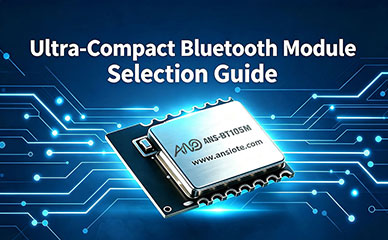
Với sự phổ biến ngày càng tăng của các thiết bị IoT, mô-đun Bluetooth siêu nhỏ đã trở thành thành phần cốt lõi để kết nối các thiết bị thông minh. Từ thiết bị đeo thông minh và giám sát y tế đến kết nối công nghiệp, ngày càng có nhiều sản phẩm đặt ra những yêu cầu khắt khe về kích thước, điện năng tiêu thụ, và hiệu suất của các mô-đun. Tuy nhiên, phải đối mặt với hàng loạt mô-đun Bluetooth công suất thấp trên thị trường, làm thế nào để bạn chọn một cái phù hợp nhất cho sản phẩm của bạn?
Bài viết này sẽ cung cấp hướng dẫn lựa chọn mô-đun Bluetooth thực tế dựa trên năm kích thước cốt lõi: kích cỡ, điện năng tiêu thụ, kết nối, khả năng tương thích giao thức, và dễ dàng phát triển, kết hợp với nghiên cứu điển hình thực tế về Công nghệ Ansiot Bluetooth siêu nhỏ 5.2 mô-đun.
Tổng quan về lựa chọn: Công thức cốt lõi để chọn mô-đun Bluetooth siêu nhỏ = Kích thước nhỏ + Tiêu thụ điện năng thấp + Nhiều kết nối + Giao thức mới nhất + Phát triển nhanh. Các phần sau đây chia nhỏ các tiêu chí đánh giá và đề xuất thực tế cho từng khía cạnh.
TÔI. Tiêu chuẩn kích thước mô-đun Bluetooth siêu nhỏ: Milimet Xác Định Yếu Tố Hình Thức Sản Phẩm
Mô-đun Bluetooth siêu nhỏ thường đề cập đến các mô-đun vi mô có kích thước từ 16 × 10mm trở xuống, với một số sản phẩm hàng đầu thậm chí còn đạt tới mức 6×6mm. Tuy nhiên, khi chọn một mô-đun, người ta không nên mù quáng theo đuổi “nhỏ nhất” kích thước—kích thước mô-đun nhỏ hơn thường có nghĩa là ít chân GPIO hơn, hội nhập cao hơn, và khả năng mở rộng ngoại vi hạn chế hơn.
Khuyến nghị lựa chọn
Kịch bản hạn chế về không gian (nhẫn thông minh, máy trợ thính vô hình, vân vân.): Ưu tiên module siêu nhỏ 10×15mm.
Nói chung các kịch bản nhỏ gọn (vòng tay thông minh, thiết bị y tế cầm tay): 17 × 13mm là chấp nhận được.
Kịch bản giàu không gian (cổng công nghiệp, chủ nhà thông minh): Hạn chế về kích thước có thể được nới lỏng một cách thích hợp; ưu tiên số lượng pin và khả năng mở rộng.
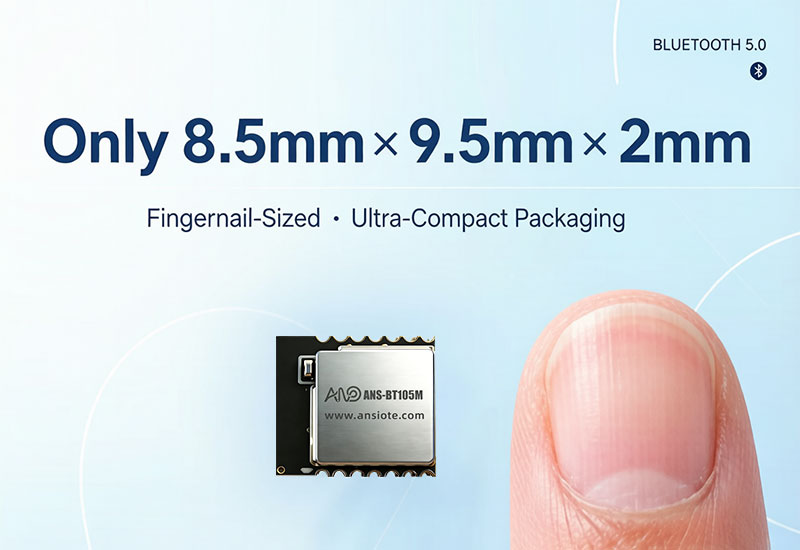
Đối với các sản phẩm có không gian cực kỳ hạn chế, chẳng hạn như thiết bị đeo thông minh và thiết bị y tế cầm tay, kích thước mô-đun thường là trở ngại đầu tiên. Bluetooth của Ansiot Technology là một lựa chọn tuyệt vời—kích thước của nó chỉ 8,5mm × 9,5mm × 2 mm, có kích thước gần bằng móng tay. Gói siêu thu nhỏ này giải phóng nhiều không gian PCB hơn, cho phép R&Nhân sự D linh hoạt hơn trong các thiết kế phần cứng nhỏ gọn.
II. So sánh mức tiêu thụ năng lượng của mô-đun Bluetooth công suất thấp: Sự khác biệt về mức microamp dẫn đến sự khác biệt đáng kể về tuổi thọ pin
Đối với các thiết bị di động chạy bằng pin, mức tiêu thụ điện năng của mô-đun Bluetooth trực tiếp quyết định trải nghiệm người dùng và khả năng cạnh tranh thị trường. Một trong những ưu điểm cốt lõi của mô-đun Bluetooth năng lượng thấp dòng điện dự phòng của họ là bao nhiêu, có thể thấp đến mức microamp.
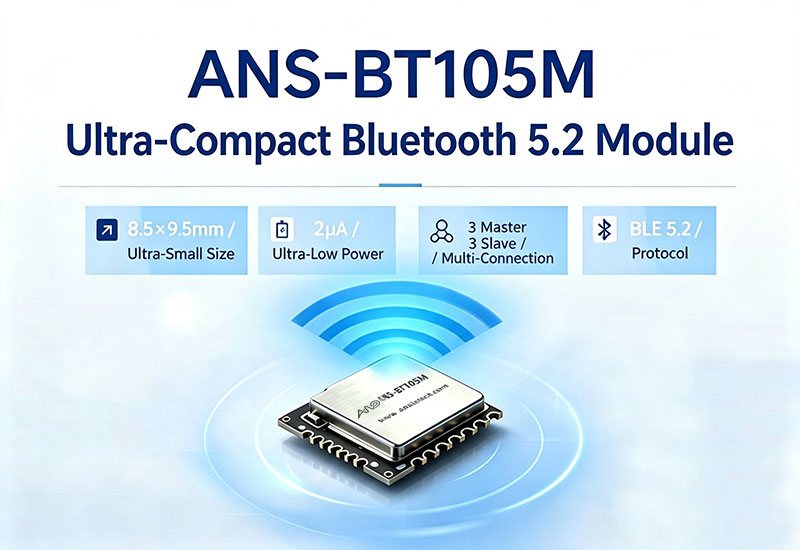
tiêu thụ ít nhất 2μA ở chế độ ngủ sâu và có thể đánh thức hệ thống sau vài giây thông qua đầu vào dữ liệu cổng nối tiếp. Điều này có nghĩa là các thiết bị chạy bằng pin sử dụng mô-đun này có thể đạt được thời lượng pin dài với mức tiêu thụ điện năng ở chế độ chờ cực thấp, làm cho chúng đặc biệt phù hợp với các tình huống sau:
Thiết bị làm đẹp thông minh – yêu cầu thời gian chờ lâu và hoạt động không liên tục
Thiết bị quét di động – yêu cầu đánh thức thường xuyên và phản hồi nhanh
Thiết bị điện tử y tế thu nhỏ – đòi hỏi cả thời lượng pin dài và độ ổn định
Lựa chọn mức tiêu thụ điện năng không chỉ liên quan đến chế độ chờ
Khi chọn một mô-đun, ngoài việc xem xét mức tiêu thụ điện năng ở chế độ chờ, ba chỉ số sau đây cần được đánh giá toàn diện:
Dòng truyền tải – ảnh hưởng đến điện năng tiêu thụ trong quá trình truyền tải đang hoạt động
Nhận dòng điện – ảnh hưởng đến điện năng tiêu thụ trong quá trình giám sát liên tục
Cơ chế ngủ/thức – mô-đun hỗ trợ nhiều phương pháp đánh thức mang lại sự linh hoạt cao hơn trong thiết kế sản phẩm
III. Kết nối mô-đun Bluetooth: Chế độ Master-Slave và Kiến trúc đa kết nối
Các kịch bản ứng dụng khác nhau có những yêu cầu rất khác nhau về khả năng kết nối của Mô-đun truyền qua Bluetooth. Truyền điểm-điểm đơn giản chỉ yêu cầu một mô-đun chủ-phụ duy nhất, trong khi các kịch bản IoT phức tạp có thể yêu cầu kiến trúc mạng có một chủ và nhiều phụ hoặc thậm chí nhiều chủ và nhiều phụ.
ANS-BT105M Đa Kết Nối trong thực tế
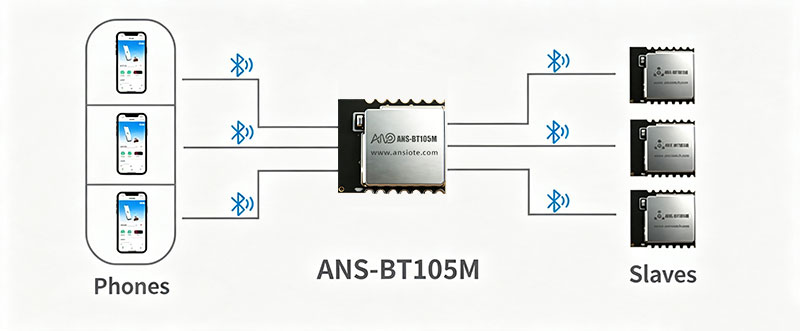
Nó thể hiện khả năng ấn tượng trong lĩnh vực này—triển khai hoàn hảo kiến trúc đa kết nối tích hợp chủ-nô lệ, hỗ trợ lên đến 3 bậc thầy và 3 nô lệ, có nghĩa là một kết nối ổn định với 6 thiết bị đồng thời. Điều này có nghĩa là dù xây dựng một mạng cảm biến nhỏ hay thực hiện điều khiển cộng tác đa thiết bị, mô-đun có kích thước bằng móng tay này có thể dễ dàng xử lý công việc.
Khuyến nghị lựa chọn
Nhà phát triển cần xác định các chế độ master-slave cần thiết và số lượng kết nối tối đa dựa trên yêu cầu kết nối mạng của sản phẩm:
Truyền điểm-điểm (Truyền dữ liệu Bluetooth, ghép nối thiết bị): Tích hợp master-slave là đủ.
Một bậc thầy, nhiều nô lệ (cổng thu thập dữ liệu từ nhiều cảm biến): Ít nhất 1 chủ và 3 nô lệ được yêu cầu.
Nhiều bậc thầy, nhiều nô lệ (mạng lưới phức tạp, cộng tác đa thiết bị): Chọn một mô-đun hỗ trợ 3 bậc thầy và 3 nô lệ hoặc hơn.
Nếu bạn dự đoán rằng sản phẩm của mình có thể cần mở rộng để bao gồm nhiều thiết bị trong tương lai, việc chọn một mô-đun như ANS-BT105M với khả năng đa kết nối mạnh mẽ chắc chắn sẽ mang lại nhiều cơ hội để nâng cấp sản phẩm.
IV. BLE 5.2 Giao thức và khả năng tương thích: Khả năng thực sự đằng sau số phiên bản
Các giao thức Bluetooth luôn thay đổi đã mang lại những cải tiến liên tục về tốc độ truyền, khoảng cách truyền, và khả năng chống nhiễu. Sự lựa chọn chủ đạo hiện nay đã phát triển từ BLE 4.2 tới Bluetooth 5.0 trở lên. Các mô-đun hỗ trợ Bluetooth 5.0 trở lên thường đạt được khoảng cách truyền dài hơn và tốc độ dữ liệu cao hơn.
Khả năng giao thức ANS-BT105M
Việc sử dụng BLE 5.2 giao thức, hoàn toàn tương thích với nhiều giao thức tiêu chuẩn như GATT, GIẤU, và ATT, và hỗ trợ cấu hình linh hoạt với đầy đủ bộ lệnh AT. Quan trọng hơn, nó cũng hỗ trợ qua mạng (OTA) cập nhật, đáp ứng đầy đủ nhu cầu bảo trì sản phẩm và lặp lại tính năng sau này.
Khuyến nghị lựa chọn
Nhà phát triển không nên chỉ nhìn vào số phiên bản giao thức, mà còn tập trung vào các khả năng thực tế sau đây:
Tính đầy đủ của ngăn xếp giao thức – Nó có hỗ trợ các giao thức tiêu chuẩn như GATT không, GIẤU, và ATT?
Hỗ trợ tệp cấu hình – Nó có bao gồm các cấu hình được yêu cầu bởi ứng dụng đích không?
Tính khả dụng của Công cụ Phát triển – Nó có hỗ trợ gỡ lỗi lệnh AT và cấu hình cổng nối tiếp không?
Khả năng nâng cấp OTA – Nó có hỗ trợ nâng cấp chương trình cơ sở qua mạng không, giảm chi phí bảo trì sau này?
V.. Dễ dàng phát triển và tùy chỉnh: Máy gia tốc từ chọn lọc đến sản xuất hàng loạt
Ngay cả phần cứng tốt nhất cũng sẽ làm chậm quá trình ra mắt sản phẩm nếu ngưỡng phát triển quá cao. Giá trị truyền qua lớn nhất mô-đun Bluetooth nằm ở “cấu hình nhanh thông qua các lệnh AT mà không cần phải hiểu ngăn xếp giao thức Bluetooth.” Hơn nữa, the module’s serial port adaptation capabilities and underlying customization services directly impact R&D efficiency and product differentiation.
ANS-BT105M Development Support
The supports an ultra-wide serial port baud rate range of 600 ĐẾN 921600, and allows users to freely configure the serial port parity and stop bits, hoàn toàn tương thích ngược với nhiều hệ thống điều khiển chính cũ hơn hoặc đặc biệt. It also provides the following deep low-level customization services:
One-click disconnection via pass-through function commands – flexible control of connection status
Precise printing of running status – facilitating debugging and troubleshooting
Personalized customization of serial port data bits – adapting to non-standard master control systems
Khuyến nghị lựa chọn
It is recommended to prioritize vendors that provide the following support:
Comprehensive technical documentation and sample code
Phạm vi tốc độ truyền cổng nối tiếp cực rộng (tương thích với các hệ thống điều khiển chính khác nhau)
Dịch vụ tùy biến cấp thấp sâu (có thể tùy chỉnh ở cả lớp giao thức và lớp chức năng)
Đội ngũ hỗ trợ kỹ thuật phản hồi nhanh
Điều này không chỉ rút ngắn chu kỳ phát triển mà còn mang lại sức mạnh kỹ thuật để tạo sự khác biệt cho sản phẩm..
Bảng so sánh của Mô-đun Bluetooth siêu nhỏ Thông số lựa chọn:
Để so sánh dễ dàng và nhanh chóng, chúng tôi đã tóm tắt các điểm lựa chọn cho năm khía cạnh được đề cập ở trên như sau:
| Kích thước | Tiêu chí lựa chọn | Thông số |
|---|---|---|
| Kích cỡ | 16×10 mm siêu nhỏ gọn | 8.5×9,5 ×2 mm |
| Tiêu thụ điện năng | Chế độ chờ 5μA được coi là tiêu thụ điện năng thấp | Giấc ngủ sâu 2μA |
| Kết nối | Ít nhất 1 chủ và 3 nô lệ | 3 bậc thầy và 3 nô lệ (6 thiết bị) |
| Giao thức | BLE 5.0+ | BLE 5.2 |
| Phát triển | Hỗ trợ lệnh AT | tốc độ truyền từ 1200bps đến 921,6Kbps; OTA; Lệnh AT |
Câu hỏi thường gặp: Các câu hỏi thường gặp về Mô-đun Bluetooth siêu nhỏ
Q1: Tiêu chuẩn kích thước cho mô-đun Bluetooth siêu nhỏ là gì?
Mô-đun Bluetooth cỡ nhỏ thường đề cập đến các mô-đun vi mô có kích thước từ 16 × 10mm trở xuống, với một số sản phẩm hàng đầu đạt mức 6×6mm. Khi lựa chọn, nên ưu tiên các mô-đun 10×15mm cho các tình huống hạn chế về không gian, và 17×13mm cho các tình huống chung. ANS-BT105M, với kích thước chỉ 8,5×9,5mm, thuộc tầng cao nhất của các mô-đun siêu nhỏ.
Q2: Mức tiêu thụ điện năng ở chế độ chờ của mô-đun Bluetooth công suất thấp sẽ là bao nhiêu??
Các thiết bị dùng pin nên ưu tiên mô-đun Bluetooth năng lượng thấp với mức tiêu thụ điện ở chế độ chờ 2μA. Lấy chuyện đó làm ví dụ, mức tiêu thụ điện năng của nó ở chế độ ngủ sâu chỉ ở mức 2μA, và nó có thể được đánh thức sau vài giây thông qua dữ liệu cổng nối tiếp, làm cho nó phù hợp với các tình huống có thời lượng pin dài như thiết bị làm đẹp thông minh và thiết bị y tế cầm tay.
Q3: Một mô-đun Bluetooth có thể kết nối đồng thời bao nhiêu thiết bị?
Các mô-đun Bluetooth khác nhau có khả năng kết nối khác nhau. Hỗ trợ kiến trúc đa kết nối tích hợp master-slave, hỗ trợ lên đến 3 bậc thầy và 3 nô lệ, có nghĩa là một kết nối ổn định của 6 thiết bị đồng thời, thích hợp để xây dựng các mạng cảm biến nhỏ hoặc các kịch bản điều khiển cộng tác đa thiết bị. Các mô-đun truyền trong suốt thông thường thường chỉ hỗ trợ 1 chủ và 1 nô lệ hoặc 1 chủ và nhiều nô lệ.
Q4: Ưu điểm của Bluetooth là gì 5.2 mô-đun so với Bluetooth 5.0?
Bluetooth 5.2 cung cấp những cải tiến liên tục trên 5.0 ở tốc độ truyền, khoảng cách truyền, và khả năng chống nhiễu. Việc sử dụng BLE 5.2 giao thức, tương thích với GATT, GIẤU, ĐẾN, và các giao thức tiêu chuẩn khác, và hỗ trợ cấu hình lệnh AT và nâng cấp qua mạng OTA.
Q5: Những thông số nào cần được xem xét khi chọn mô-đun Bluetooth siêu nhỏ gọn?
Selecting an ultra-compact Bluetooth module requires attention to five core dimensions: module size (affecting product form factor), standby power consumption (affecting battery life), kết nối (master/slave mode and maximum number of connections), protocol version and compatibility (BLE version, protocol stack support), và dễ dàng phát triển (AT command support, serial port baud rate range, customization services).
Bản tóm tắt
Choosing an ultra-compact Bluetooth module is never a single-dimensional decision. From size to power consumption, from connectivity to protocols, from ease of development to customization services, each dimension can be a key variable in the success or failure of a product.
Ansiot Technology’s ANS-BT105M, with its ultra-small 8.5×9.5mm size, ultra-low power consumption of 2μA, robust 3-master 3-slave connectivity, and full BLE 5.2 hỗ trợ giao thức, provides a high-performance, highly flexible wireless interconnection solution for space-constrained smart terminals.
If your product is facing the triple challenges of “kích thước nhỏ, low power consumption, and multiple connections,” you might want to take a closer look at the ANS-BT105M—this tiny Bluetooth module, có kích thước bằng móng tay, may be the answer you’ve been looking for.