

In today’s era of explosive growth in the number of IoT devices, Bluetooth Düşük Enerji (BLE) modüller have become a core link connecting the physical and digital worlds. From smart wearables and medical monitoring to industrial sensors, BLE modules, with their extremely low power consumption and broad ecosystem compatibility, occupy a dominant position in short-range wireless communication.
If you are confused about product selection or want to delve into the technical core of Bluetooth Low Energy modules, this comprehensive analysis will clear up your confusion. This article provides a complete overview from five dimensions: core principles, technical advantages, key parameters, application scenarios, and selection tips.
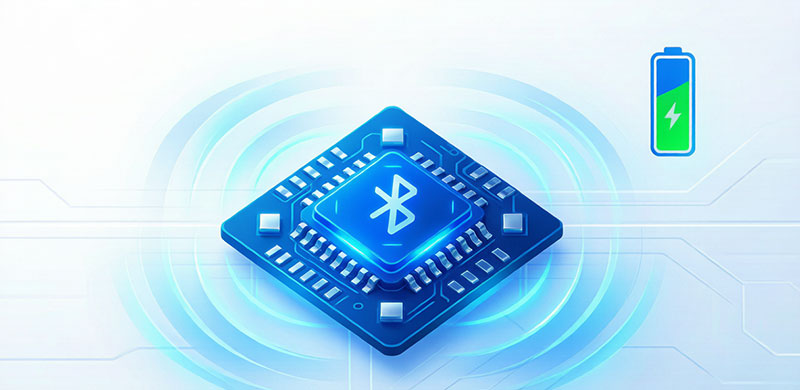
Conceptual diagram of a Bluetooth Low Energy (BLE) module showing integrated MCU, RF transceiver, and antenna circuit
BEN. What is a Bluetooth Low Energy Module? Redefining “Connectivity”
A Bluetooth Düşük Enerji (BLE) modül is an embedded module that highly integrates the Bluetooth 4.0/5.0 and above protocol stack, RF transceiver, microcontroller (MCU), and antenna matching circuitry onto a small PCB board.
Unlike Klasik Bluetooth, BLE technology is not simply a “low-power version of Bluetooth,” but a completely new communication architecture. Designed specifically for small data packets and low-frequency transmissions, it truly realizes the vision of “powering devices for years on a single button battery.”
A mature Bluetooth transmission module allows developers to enable wireless transmission capabilities without needing expertise in RF antenna design and complex impedance matching. This is achieved simply through serial port commands, significantly lowering the development barrier for SMEs and startups without dedicated RF teams.
II. Core Technology Principles: Why Can BLE Achieve Extremely Low Power Consumption?
To select a good low-power Bluetooth module, it’s essential to understand its power-saving logic. This is primarily due to the following three mechanisms:
1. Extremely Short RF On-Time (Extremely Low Duty Cycle)
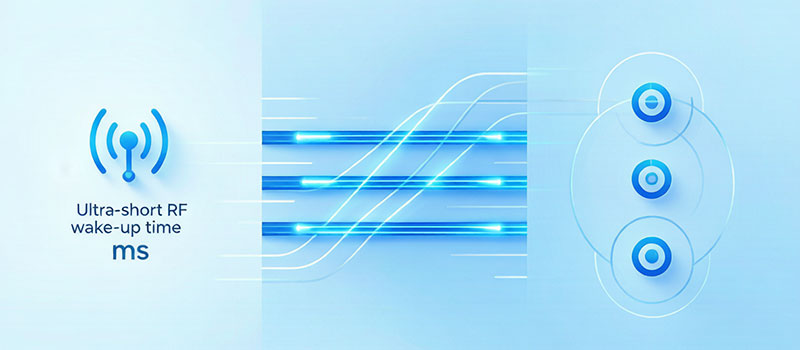
Traditional Bluetooth requires continuous power consumption to maintain the connection upon power-on. BLE, however, only wakes up for the brief moment when data transmission is needed, completing data packet transmission in just a few milliseconds before quickly entering a deep sleep state. This extremely low duty cycle is the fundamental reason why BLE can keep the average current in the µA range.
2. Optimized Broadcast Channels and Adaptive Frequency Hopping (AFH)
Bluetooth Low Energy modules use only 3 broadcast channels (traditional Bluetooth uses 32), resulting in extremely fast device discovery and connection speeds. After connection, Adaptive Frequency Hopping (AFH) automatically avoids interfering channels such as Wi-Fi, ensuring Bluetooth transmission stability and preventing retransmission power consumption due to signal congestion.
3. Flexible Connection Parameters and PHY Modes
The latest Bluetooth 5.0 Low Energy modules support LE 1M PHY, LE 2M PHY, and LE Coded PHY, allowing for flexible trade-offs between communication rate and transmission distance.
| PHY mode | Rate | Typical distance | Applicable scenarios |
|---|---|---|---|
| LE 1M PHY | 1 Mbps | ~30~100m | General-purpose sensors, akıllı evler |
| LE 2M PHY | 2 Mbps | ~20~60m | High-throughput data transmission |
| LE Coded PHY(S=8) | 125 Kbps | 300m+ | Long-distance, low-power scenarios |
III. Six Core Advantages of Bluetooth Low Energy Transmission Modules
1. Extreme Power Consumption Control: Sleep current can reach the μA level, and the average operating current is below the mA level, making it ideal for battery-powered IoT Bluetooth modules.
2. Cross-Platform Compatibility: Natively compatible with smartphones, tabletler, and computers, requiring no additional gateway. This is an ecosystem advantage unmatched by protocols such as Zigbee and Z-Wave. 3. Low Cost: With mature technology, domestically produced BLE Bluetooth modules offer excellent cost-effectiveness, with significant cost advantages for large-scale mass production.
4. High Security: Supports AES-128/256 encryption and secure pairing, meeting the data transmission needs of medical and financial applications.
5. Plug-and-Play Transparent Transmission Mode: Most data transmission Bluetooth modules support serial port transparent transmission, eliminating the need for users to modify the code architecture of existing wired products, resulting in a very low development threshold.
6. Enhanced Networking Capabilities: The Bluetooth 5.4 specification introduces features such as Periodic Broadcast Response (PAwR), making Bluetooth Low Energy modules more promising in one-to-many large-scale system networking such as Electronic Shelf Tags (ESL).
IV. Essential Selection Guide: 7 Key Parameters for Bluetooth Low Energy Transmission Modules
Before purchasing Bluetooth Low Energy modules, be sure to check the following 7 key parameters to avoid pitfalls:
Bluetooth Sürümü: It is recommended to choose 5.0 or higher. Compared to 4.2, the transmission distance is increased by 4 times, the broadcast data packet capacity is increased by 8 times, and it is backward compatible with older devices.
Master/Slave Role: It is necessary to clarify whether the device is a master (scanning connection), a slave (broadcast connection), or a master-slave hybrid. For mobile phone peripherals, choose slave; for gateway devices, choose master; for flexible switching, choose a master-slave hybrid module.
Chip Solution: Mainstream solutions include Nordic (most complete ecosystem), TI, Telink, and Fengjia. Domestic solutions offer high cost-effectiveness, performance comparable to international giants, and guaranteed mass production consistency.
Transmit Power and Receive Sensitivity: Both determine the low-power Bluetooth transmission distance. High-end modules can achieve +20dBm transmit and -103dBm receive, meeting long-distance transparent transmission requirements.
Power Consumption Performance: A real power consumption test report must be obtained, distinguishing between peak current and sleep current, especially focusing on average power consumption in connected mode, as this is the determining factor for battery life.
Interface and Size: Select interfaces such as UART, SPI, and I2C as needed. Wearable devices require small-size stamp-type packaging, while industrial equipment can use pin-type packaging. DIP packaging facilitates development and debugging.
Whether it has an integrated MCU: Pure transparent transmission modules are inexpensive and quick to develop; smart modules with integrated MCUs allow for customized firmware, enabling local logic processing, saving main control resources, and are suitable for products with strict BOM requirements.
V. Tipik Uygulama Senaryoları: What can BLE modules do?
5.1 Sağlık hizmeti: Digital Chronic Disease Management
Blood glucose meters, pulse oximeters, and temperature patches upload vital sign data in real time to a mobile app via BLE low-power Bluetooth modules, enabling digital chronic disease management. The extremely low power consumption of BLE modules ensures long battery life for medical devices, while AES-128 encryption meets the privacy and security requirements of medical data. Medical-grade products should use modules that have passed BQB certification to reduce FDA/CE certification compliance risks.
5.2 Industrial IoT: Long-Term Maintenance-Free Operation in Harsh Environments
Vibration sensors and temperature/humidity loggers utilize the ultra-low power consumption of Bluetooth Low Energy (BLE) modüller, enabling long-term maintenance-free operation in harsh environments such as factories and warehouses. Industrial-grade modules must support operating temperatures from -40°C to 85°C. With a dustproof and waterproof housing, their typical lifespan can reach 3-5 years or more, completely replacing wired wiring solutions.
5.3 Otomotiv Elektroniği: Digital Car Keys and OBD Diagnostics
OBD fault diagnosis and digital car keys employ automotive-grade Bluetooth transmission modules, meeting high-speed connectivity and information security requirements. The digital car key solution is based on BLE proximity sensing; the phone automatically unlocks the vehicle when it approaches. Combined with the CCC 3.0 standart, it achieves sub-meter accuracy in location determination and is secure against replay attacks.
5.4 Asset Tracking and Indoor Positioning
BLE beacons do not rely on GPS and utilize RSSI or AoA/AoD angle measurement technology to achieve indoor positioning with sub-meter accuracy. Widely used in hospital asset management, warehouse inventory, exhibition hall navigation, ve diğer senaryolar. The direction finding feature introduced in BLE 5.1 further improves indoor positioning accuracy.
VI. Avoidance Guide: Common Misconceptions in Purchasing Low-Power Bluetooth Transmission Modules
- Blindly Pursuing “Longest Distance” — Long distance often means high power consumption and large antenna size. A balance between distance and power consumption is necessary. For most indoor scenarios, 30-50m is sufficient; pursuing 300m at will sacrifice battery life.
- Ignoring Secondary Development Resources — Buying hardware without considering the SDK is a disaster. Ensure the supplier provides complete example programs, a mobile debugging app, and RF testing support; aksi takdirde, the integration testing phase will consume a significant amount of time.
- Underestimating Certification Costs — Exported products must use Bluetooth modülleri certified by BQB, FCC, CE, RoHS, vesaire., which greatly reduces compliance risks and time costs for the terminal. Choosing certified modules can save tens of thousands of yuan in certification fees.
- Focusing solely on unit price while ignoring consistency—RF consistency directly determines the connectivity experience. Low-priced modules often cut corners on crystal oscillator frequency offset and antenna matching, leading to frequent connection drops in batches, with after-sales costs far exceeding the saved hardware costs.
- Ignoring supply chain stability—choose module manufacturers with mature supply chain guarantees to ensure production line shutdowns during mass production due to chip supply disruptions. MOQ, delivery time, and inventory strategies should be confirmed in advance.
VII. Ansiot Technology Recommendations: BLE Module Solutions Covering Diverse Needs
Değerler Teknolojisi, a professional manufacturer of IoT wireless communication modules, offers a product matrix of BLE modules covering different power consumption, size, and connectivity requirements:
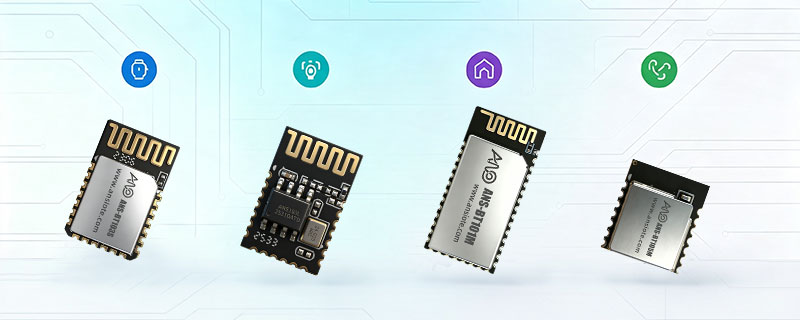
ANS-BT103S:
BLE 5.2 · 16×10mm ultra-small size · Master-slave integrated · HID wireless backlink
Suitable for wearables, medical devices, and car keys
ANS-BT103L:
BLE 5.4 · Low cost and low power consumption · Slave-end serial port pass-through
Suitable for sensors, akıllı evler, and beacons
ANS-BT101M:
BLE 5.x · Master-slave integrated · Rich AT commands · Master-end pass-through
Suitable for gateways, handheld terminals, and data acquisition
ANS-BT105M:
BLE 5.x · Ultra-small size · 3 Master 3 Slave multi-connection
Suitable for multi-sensor parallel data acquisition gateways
VIII. FAQ Frequently Asked Questions
The following are the most frequently asked questions by engineers and product managers when selecting BLE modules:
What is the difference between Bluetooth Low Energy (BLE) modules and Classic Bluetooth?
BLE is not a lower-power version of Classic Bluetooth, but a completely new communication architecture designed for small data packets and low-frequency transmissions. BLE sleep current can be as low as µA, making it suitable for battery-powered devices; Classic Bluetooth has higher throughput and is suitable for audio transmission. In practical selection: prioritize BLE for sensors, health devices, vesaire.; choose Classic Bluetooth or a dual-mode (SPP+BLE) solution if audio transmission is required.
What is the actual transmission distance of a BLE module?
In a standard indoor environment, the typical transmission distance of a BLE 5.0 module is approximately 30–100 meters. Using LE Coded PHY (long-range mode), it can reach over 300 meters in open environments. High-end modules with a transmit power of +20dBm and a receive sensitivity of -103dBm can maintain a stable connection even through several floors. Actual distance is affected by environmental obstructions, 2.4GHz interference, vesaire., so actual testing is recommended.
What is Bluetooth serial port pass-through? Does development require knowledge of the Bluetooth protocol stack?
Bluetooth serial port pass-through refers to using the BLE module as a wireless serial cable. The MCU sends data via UART, and the module automatically establishes and transmits the Bluetooth link. The remote MCU receives the data via its serial port. Developers do not need to understand the details of the Bluetooth protocol stack such as GATT/ATT, significantly reducing the development threshold. Typical integration time is only one week.
What are the sleep current and operating current of the BLE module?
The sleep current of a mature BLE module can be as low as 1-5 µA, the average current in broadcast mode is approximately 10-50 µA (depending on the broadcast interval), and the average current in connected mode is approximately 1-5 mA. Örneğin, a 500mAh button battery can last for several years in pure standby mode and several months to over a year in low-frequency broadcast mode. Always request a measured power consumption report from the supplier, rather than relying solely on the theoretical values in the chip datasheet.
What certifications are required for purchasing BLE modules?
- Domestic sales: SRRC (Radio Type Approval, issued by the Ministry of Industry and Information Technology)
- Export to the US: FCC ID
- Export to the EU: CE RED
- Bluetooth interoperability: BQB (Bluetooth Qualification)
- Medical products: ISO 13485, FDA, vesaire.
Choosing modules that have passed the above certifications can significantly reduce compliance costs and certification time for end products.
What Bluetooth Düşük Enerji (BLE) modüller does Ansiot Technology offer?
Ansiot Technology provides a series of BLE modules to meet different needs: ANS-BT103S (BLE 5.2, ultra-small size 16×10mm, master/slave integrated, HID backlink), ANS-BT103L (BLE 5.4, low-cost, low-power slave transparent transmission), ANS-BT101M (BLE 5.x, master/slave integrated, rich AT commands), and ANS-BT105M (3 master, 3 slave multi-connection). Free samples are available for all models, along with complete development materials and one-on-one technical support.
IX. Çözüm
Nesnelerin İnterneti çağında, Bluetooth Düşük Enerji (BLE) modüller are no longer simply data transmission bridges, but rather keys to lowering development barriers and accelerating product launches. Only by deeply understanding their technical essence, strictly controlling selection parameters, and choosing solutions with mature technical support and a reliable supply chain can this small “modül” become the strongest moat for your product.
Core Selection Principles Review:
- Power Consumption Priority — Request actual test reports and focus on average power consumption in connected mode;
- Size Adaptability — Select the package according to product space constraints; choose a small package with a stamp-sized form factor for wearable devices;
- Flexible Roles — Choose a master-slave integrated module when master-slave requirements are uncertain to reduce BOM complexity;
- Certification Compliance — Confirm the required certifications for the target market in advance and prioritize certified modules;
- Technical Support — Choose a supplier that can provide a complete SDK, examples, and after-sales technical support.